Related Articles
The Difference Between Hybrid Inverters and Normal Inverters
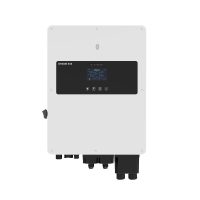
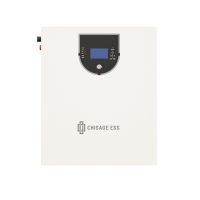
As the application of renewable energy continues to grow, hybrid inverters have become one of the most popular products for homes and businesses. As a hybrid inverter supplier with leading technology, CHISAGE ESS helps users to deeply understand the difference between hybrid inverters and normal inverters and choose products that are more suitable for you.
What is a Hybrid Inverter?
It is not only capable of converting direct current (DC) to alternating current (AC), supplying to households, enterprises or directly into the power grid, but also converting AC back to DC when needed, and storing it in batteries and other energy storage devices, realizing a two-way flow of electrical energy. CHISAGE ESS full range of hybrid inverters features an IP65 high protection rating, supports diesel generator connections, and can achieve on/off switching within 5ms to ensure uninterrupted power supply. They also support parallel operation of up to 20 units in off-grid mode, allowing for flexible expansion to meet various energy storage needs, making them highly favored by customers worldwide.
Main functions of an Hybrid Inverter:
Power Conversion: Achieves efficient conversion between DC and AC power, ensuring seamless integration between the energy storage system and the grid or load.
Energy Storage Management: Intelligently controls the charging and discharging processes of the battery, optimizing storage strategies based on grid conditions and electricity price fluctuations to improve energy utilization efficiency.
Grid Interaction: Serves as an emergency backup power source during grid failures or outages, ensuring power supply for critical loads; at the same time, during normal grid operation, participates in peak shaving and frequency regulation to enhance grid stability.

What is a Normal Inverter?
A normal inverter here mainly refers to the on-grid inverter. It is only used to convert the direct current (DC) generated by solar panels directly into alternating current (AC) for direct use. It has no energy storage capabilities and relies only on the grid when solar energy is insufficient.
Detailed Comparison
There are significant differences between hybrid inverters and normal inverters in several aspects, which are mainly reflected in the functions, application scenarios, costs and system complexity, and energy utilization efficiency.
1. Functional differences
Hybrid inverters: It has the functions of two-way conversion of electric energy and energy storage management, and can intelligently control the charging and discharging process of the battery to realize the efficient use of energy and emergency backup.
Normal inverters: It mainly realizes the conversion from DC to AC power and delivers the power directly back to the grid. It does not have the function of energy storage, and mainly focuses on the synchronized operation with the grid and the stability of power quality.
2.Application Scenarios
Hybrid inverters: Suitable for scenarios requiring energy storage and management, such as renewable energy generation systems, microgrid systems, and electric vehicle charging stations. It can also serve as an emergency backup power source for homes or businesses, providing power support during grid outages.
Normal inverters: More suitable for scenarios where energy needs to be directly fed back into the grid, such as large-scale solar power plants.
3. Cost and System Complexity
Hybrid inverters: Due to having more functions and higher technical content (such as energy storage management, charge and discharge control), the initial investment cost is typically higher than that of traditional grid-tied inverters. Additionally, the system design of energy storage inverters is more complex, requiring consideration of battery selection, matching, and the integration of management systems.
Normal inverters: Although they also have significant technical content and cost, their system design and control strategies are relatively simpler compared to energy storage inverters.
4. Energy Utilization Efficiency
Hybrid inverters: Capable of more flexible energy management, achieving cost savings and improving energy utilization efficiency through peak shaving and valley filling strategies. This advantage is particularly evident in regions or periods with significant electricity price fluctuations.
Normal inverters: While also focused on energy utilization efficiency, they mainly improve efficiency through synchronized operation with the grid and control of power quality. However, the potential for further improvement in energy utilization efficiency is relatively limited.

CHISAGE ESS offers a range of high-performance hybrid inverters tailored to the diverse needs of residential, commercial, and industrial users. Visit our website to explore our product offerings and learn how our solutions can enhance your energy efficiency and self-reliance.