Related Articles
What Is The Low Voltage Three-Phase Technology
The Evolution of Electrical Distribution: Defining Low Voltage Three-Phase Systems
Modern power systems owe their efficacy to the sophisticated orchestration of low voltage three-phase technology. Unlike single-phase systems, which rely on a solitary alternating current waveform, three-phase configurations employ three synchronized currents, each offset by 120 degrees. This triad of phases generates a self-balancing electrical flow, minimizing energy dissipation while maximizing torque in industrial motors. The term *low voltage*—typically defined as systems operating below 1,000 volts—ensures safer, cost-effective distribution for commercial and residential applications.
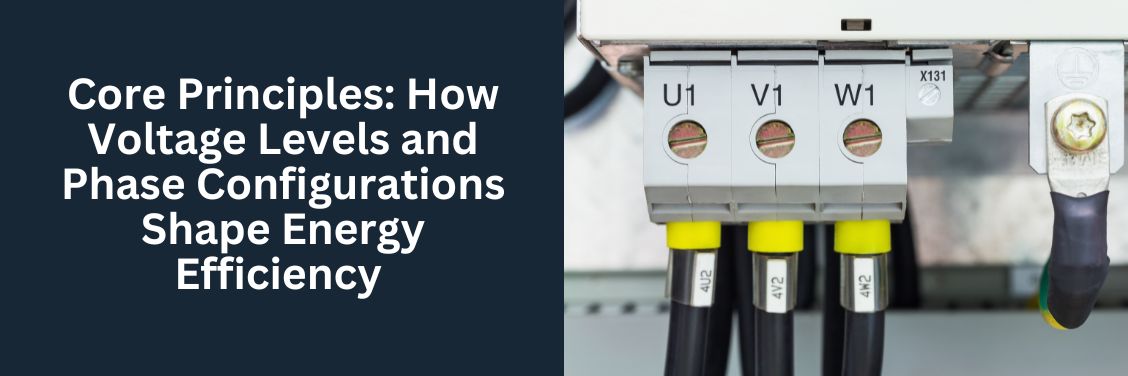
Core Principles: How Voltage Levels and Phase Configurations Shape Energy Efficiency
At the heart of three-phase systems lies the interplay between voltage symmetry and harmonic mitigation. Balanced phase voltages reduce reactive power losses, a phenomenon exacerbated by impedance mismatches in unbalanced loads. Advanced inverters and phase converters now leverage pulse-width modulation (PWM) to harmonize sinusoidal waveforms, ensuring seamless integration with variable frequency drives. Such innovations elevate power factor correction, a metric critical to minimizing carbon-intensive grid strain.
Historical Milestones: From Early AC Innovations to Modern Industrial Adoption
The genesis of three-phase power traces back to Nikola Tesla’s 1888 polyphase induction motor patents, which laid the groundwork for alternating current dominance. By the 1920s, standardization of 400V/230V systems in Europe catalyzed industrial electrification, while North America adopted 480V/277V frameworks. The 21st century has seen a paradigm shift toward smart grids, where digital relays and IoT-enabled sensors optimize load distribution in real time, eclipsing Edison-era DC infrastructure.
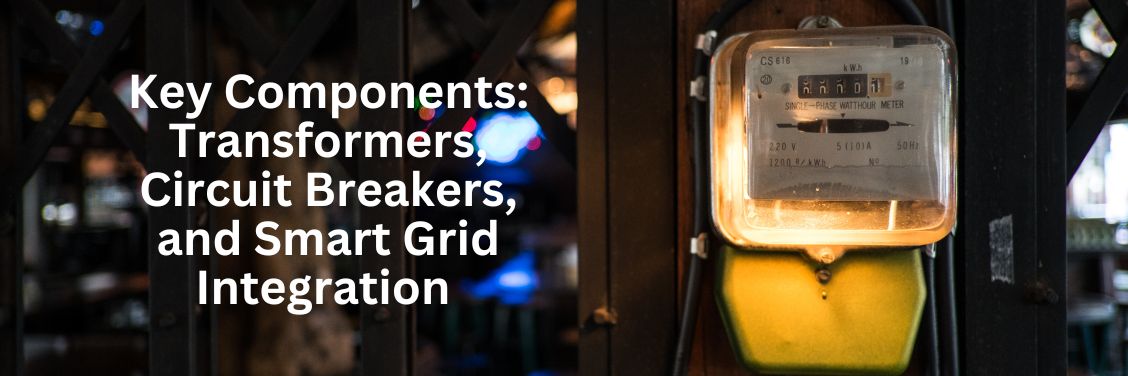
Key Components: Transformers, Circuit Breakers, and Smart Grid Integration
Transformers serve as the linchpin of voltage regulation, stepping down transmission-level voltages to safer, usable tiers. Molded case circuit breakers (MCCBs) with arc-quenching technologies now dominate fault protection, while solid-state counterparts enable microsecond-level interruption speeds. Smart grids augment these components with self-healing algorithms, autonomously rerouting power during outages—a feat exemplified by Singapore’s *Intelligent Energy System* initiative.

Applications Transforming Industries: Where Low Voltage Three-Phase Technology Excels
Industrial Automation: Powering Motors, Robotics, and Manufacturing Workflows
Three-phase induction motors, renowned for their high starting torque and efficiency, underpin assembly lines from automotive stamping presses to semiconductor fabrication. Collaborative robots (cobots) further exploit these systems, utilizing regenerative drives to feed excess kinetic energy back into the grid.
Renewable Energy Integration: Enabling Solar Farms and Wind Turbine Connectivity
Solar inverters convert photovoltaic DC output into three-phase AC, synchronizing with utility grids through phase-locked loops. Offshore wind farms, meanwhile, deploy doubly-fed induction generators (DFIGs) to maintain frequency stability despite turbulent wind conditions—a critical feature for Germany’s *Energiewende* transition.
Urban Infrastructure: Smart Cities, Data Centers, and Commercial Building Solutions
High-rise edifices leverage three-phase power for elevators and HVAC systems, while hyperscale data centers utilize redundant feeders to ensure 99.999% uptime. Barcelona’s *Superblocks* project epitomizes urban innovation, embedding three-phase microgrids to decentralize energy storage and reduce transmission losses.
Case Study Spotlight: Real-World Success Stories in Automotive and Aerospace Sectors
Tesla’s Gigafactories employ modular three-phase substations to sustain gigawatt-level production, slashing per-vehicle energy costs by 35%. In aerospace, Boeing’s Everett facility uses phase-shifting transformers to mitigate harmonic distortion from robotic welding arms, ensuring compliance with FAA electromagnetic interference standards.