Related Articles
How Does Direct Current Become Alternating Current?
Understanding the Fundamentals of Electrical Currents
What is Direct Current (DC)?
Direct Current (DC) is a type of electrical current where the flow of charge remains constant and unidirectional. In DC circuits, electrons flow in one direction, from the negative to the positive terminal of a power source, such as a battery. This type of current is commonly used in low-voltage applications, such as in small electronics, electric vehicles, and battery-powered devices.
The primary characteristic of DC is that it maintains a steady voltage level, meaning there are no fluctuations or reversals in direction. The simplicity and predictability of DC make it ideal for devices where consistent voltage is crucial, such as powering circuits within a flashlight, mobile phone, or laptop. However, when it comes to transmitting electricity over long distances, DC becomes less efficient due to energy losses in the transmission lines.
What is Alternating Current (AC)?
Alternating Current (AC), as the name suggests, alternates the direction of current flow. Unlike DC, which moves in a constant direction, AC periodically reverses direction in a sinusoidal waveform. The voltage in AC systems fluctuates between positive and negative values, creating an oscillating flow of electrons. This alternating flow allows for more efficient energy distribution over long distances, which is why AC is used in the electrical grid that powers homes, businesses, and industries worldwide.
The primary difference between AC and DC lies in how the current flows. In AC systems, the frequency of the current’s oscillation is typically measured in Hertz (Hz), representing the number of cycles per second. For example, in the United States, AC runs at 60 Hz, meaning the current changes direction 60 times per second. This oscillation is what makes AC more suitable for large-scale power distribution and high-power applications.
The Significance of Converting DC to AC in Modern Energy Systems
In modern energy systems, converting DC to AC is essential due to the widespread use of AC for power transmission and consumption. Most of the electrical grid infrastructure, from power plants to homes and businesses, is designed to operate with AC. However, many renewable energy sources, such as solar panels and batteries, generate DC electricity. Therefore, converting DC to AC is necessary for integrating renewable energy sources into the grid and for powering appliances that require AC.
The conversion process allows renewable energy systems to seamlessly integrate with existing infrastructure and enables users to consume the electricity generated by solar or wind systems effectively. With the increase in renewable energy adoption, understanding the conversion of DC to AC becomes crucial in creating a more sustainable and reliable power grid.
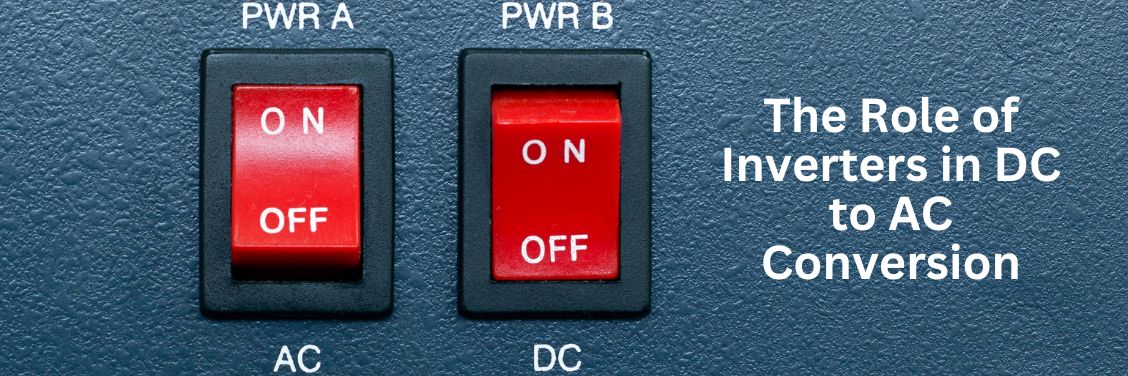
The Role of Inverters in DC to AC Conversion
What is an Inverter and How Does It Work?
An inverter is an electrical device that converts DC electricity into AC electricity. Inverters play a vital role in solar power systems, electric vehicles, and various other applications that involve the use of DC power sources. The inverter functions by taking the steady flow of electrons in DC and switching the current’s direction at a specific frequency to create the oscillations needed for AC.
At a fundamental level, an inverter works by employing electronic components such as transistors, diodes, and capacitors to modify the direction of the electrical flow, effectively converting DC into AC. The design of the inverter ensures that the output voltage and frequency match the standards of the electrical grid, making it compatible with household appliances, industrial machinery, and the electrical grid itself.
How Inverters Convert Direct Current into Alternating Current
Inverters use a process known as pulse-width modulation (PWM) to produce the AC waveform from the DC input. PWM involves rapidly switching the DC voltage on and off at a high frequency, then smoothing the waveform into a continuous alternating current. By adjusting the width of the pulses, inverters control the output voltage and frequency, ensuring the AC generated meets the required standards.
Some inverters also incorporate additional circuitry to ensure that the frequency and amplitude of the output AC waveform are precisely regulated. This helps to match the power requirements of the electrical grid or the devices being powered, ensuring safe and efficient energy conversion.
The Technical Process Behind DC to AC Conversion
The technical process behind the DC to AC conversion begins with the DC power input, which enters the inverter. Inside the inverter, the DC is first passed through a transformer or an electronic switch that creates a square wave. This square wave is then converted into a smoother sinusoidal wave using filtering techniques.
The final result is a clean, stable alternating current that can be fed directly into the electrical grid or used to power household appliances. The inverter constantly monitors the input and output to adjust for any fluctuations in power and ensure a steady, consistent supply of electricity.
Types of Inverters: Pure Sine Wave, Modified Sine Wave, and Square Wave
Inverters come in various types, with the most common being pure sine wave, modified sine wave, and square wave inverters. Pure sine wave inverters provide the most accurate and efficient AC output, closely mimicking the power supplied by the electrical grid. These are ideal for sensitive electronics and appliances that require stable and high-quality power.
Modified sine wave inverters are less expensive and provide a more basic form of AC, suitable for most household appliances, but they may cause some noise or inefficiency with more sensitive devices. Square wave inverters, although rare, generate a more primitive form of AC and are used primarily in low-cost applications where high precision is not necessary.
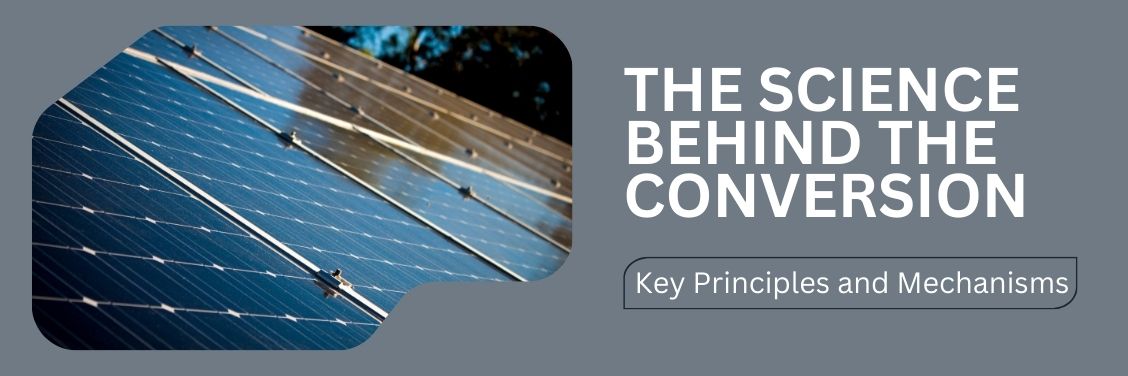
The Science Behind the Conversion: Key Principles and Mechanisms
The Principle of Electromagnetic Induction in AC Generation
The principle of electromagnetic induction is the foundation of AC generation. In AC power systems, a magnetic field is created by the current in the conductor, which interacts with a rotating coil to produce electricity. This process occurs in power stations, where turbines driven by wind, water, or steam rotate a magnetic field within a coil, generating AC.
Inverters, although not directly involved in the mechanical generation of electricity, rely on the same electromagnetic principles to generate alternating current. The components within the inverter use electrical circuits to simulate the effects of induction, ensuring the efficient conversion of DC to AC.
How Voltage and Current Change Direction in AC Circuits
In an AC circuit, voltage and current oscillate between positive and negative values. The direction of current changes continuously, causing the electrons to move back and forth within the wire. This fluctuation is what distinguishes AC from DC, where the current flows in one direction.
AC voltage is characterized by its sinusoidal waveform, which gradually rises from zero to a positive peak, drops back to zero, reaches a negative peak, and then returns to zero again. This smooth oscillation is what allows AC to be easily transmitted over long distances and is essential for the operation of electrical appliances in homes and businesses.
The Role of Frequency and Amplitude in AC Signals
Frequency refers to the number of complete cycles of AC per second and is measured in Hertz (Hz). The standard frequency of AC power in many countries is 50 Hz or 60 Hz, depending on the region. Amplitude refers to the maximum voltage reached during each cycle. Both frequency and amplitude play a critical role in ensuring that the AC generated by inverters is compatible with the electrical grid or appliances.
Inverters must maintain consistent control over both frequency and amplitude to ensure the AC meets the required standards for safe and efficient power distribution. Fluctuations in either parameter can cause appliances to malfunction or lead to inefficiencies in power transmission.
Rectification vs. Inversion: Understanding the Difference in Conversion
While rectification is the process of converting AC to DC, inversion is the opposite: converting DC to AC. Rectifiers are typically used in applications where DC power is required, such as charging batteries or powering electronic devices. In contrast, inverters are used when AC is needed for large-scale power distribution, as seen in power plants, solar energy systems, and home electrical systems.
The key difference lies in the direction of conversion: rectification is a one-way conversion, while inversion involves a cyclical process of changing the direction of the current to generate alternating power.
Applications and Benefits of Converting DC to AC
Why AC is Preferred for Long-Distance Power Transmission
One of the primary advantages of AC over DC is its ability to be easily stepped up or down in voltage using transformers. This makes AC ideal for long-distance transmission, as higher voltages allow for reduced energy losses. AC can be transmitted efficiently across vast distances, making it the backbone of modern power grids.
How DC to AC Conversion Improves Energy Efficiency in Residential and Industrial Settings
Converting DC to AC allows renewable energy sources, such as solar panels, to integrate with the grid. This conversion improves energy efficiency by ensuring that the electricity generated by solar systems can be used in homes and businesses that rely on AC power. It also enables energy storage systems to store excess energy and provide backup power when needed.
The Use of DC to AC Conversion in Renewable Energy Systems
In renewable energy systems like solar and wind power, DC is often generated by photovoltaic panels or wind turbines. However, to be compatible with the grid or to power home appliances, this DC must be converted into AC. This process makes renewable energy sources more accessible and usable, driving the adoption of green energy solutions worldwide.
Challenges and Innovations in DC to AC Conversion
Common Challenges in DC to AC Conversion
While inverters provide an efficient means of converting DC to AC, the process is not without challenges. One issue is the potential for energy losses during the conversion, especially when using lower-quality inverters or when the system is not properly sized. Another challenge is the impact of inefficiencies caused by variations in voltage and frequency, which can lead to unreliable power output.
Innovations in Inverter Technology and Their Impact on Efficiency
Recent advancements in inverter technology have focused on improving conversion efficiency, reducing energy losses, and enhancing the overall performance of solar energy systems. Innovations such as microinverters, hybrid in
verters, and more sophisticated control algorithms allow for better optimization of energy use, particularly in renewable energy applications.
The Future of DC to AC Conversion: Emerging Trends and Technologies
As the demand for renewable energy grows, so does the need for more efficient DC to AC conversion systems. Future developments may involve the integration of advanced digital technologies, such as artificial intelligence and machine learning, to enhance real-time monitoring and control of inverters. Additionally, there is ongoing research into solid-state inverters that promise even greater efficiency and reliability.
Conclusion: The Importance of DC to AC Conversion in Today’s Energy Landscape
The Role of AC in Power Distribution and Consumption
AC is fundamental to modern power systems, enabling the efficient transmission of electricity over long distances and the seamless operation of appliances in homes, industries, and businesses.
Why Understanding the Conversion Process is Crucial for Energy Systems
The conversion of DC to AC is not just a technical necessity—it is central to the functioning of today’s electrical infrastructure. Understanding this process is crucial for anyone involved in energy systems, from engineers to consumers.
The Future Outlook of DC to AC Conversion in Emerging Technologies
With continued advancements in inverter technology and renewable energy integration, the future of DC to AC conversion looks promising. The growing emphasis on sustainable energy solutions will drive innovations that enhance the efficiency and reliability of power conversion systems.