Residential And Commercial Solar Power Systems
Understanding The Solar Power Systems For Homes And Businesses
Why More Homes and Businesses Are Going Solar
Solar power has grown exponentially in the last few years due to increasingly high demand for sustainable energy solutions. With rising energy costs and increasing environmental awareness, more and more homeowners as well business owners are opting solar a cost effective solution instead of traditional sources of electricity. Solar power presents an opportunity to reduce your electrical costs and lessen reliance on the grid, not to mention lowering carbon footprints. Around the world governments are giving rebates, tax credits and subsidies based on green power initiatives to remove financial barriers for solar-power conversion as well.
It is not just the environmental advantages that are making solar power appealing. Solar energy allows a secure feeling of having an uninterrupted unbelievable power source for homes & businesses from high electricity price and grid unpredictability. Considering the opportunities of energy independence, huge environmental benefits and possible long-term savings is it a surprise that solar power systems are high in demand by residential or commercial properties alike.
Solar Power Systems
A solar system is a power station that takes the generated electricity from sunlight and aussie it generic for houses or offices. Solar panels are the origin of any solar system, they have photovoltaic (PV) cells that catch sunlight and convert it into direct current (DC) electricity. The electrical power is then routed to an inverter, which transforms the direct current into alternating current (AC), so that it can be used by most household appliances.
In single-family home systems, the generated power flows directly into the homes electrical system. Large-scale solar arrays can be used by commercial systems to generate power for the building and drive excess capacity back into the grid, reducing costs or enhancing credit through net metering. Both systems provide ways to supply clean, renewable energy and lower your bills.
There are several advantages of using solar energy for residential and commercial spaces.
Solar power provides many benefits to both commercial and residential properties. In terms of money, solar systems can save monthly on an electric bill by decreasing the amount of energy needed to be drawn from a utility. Businesses will benefit from lower operating costs, and homeowners can save a significant amount in the long run.
On the environmental front, solar power is a clean and renewable source of energy, which can help reduce greenhouse gas emissions as well dependency on fossil fuels. It is therefore also a very attractive investment for future houseowners and company leaders since the property value will certainly rise simultaneously. Solar energy is also incredibly secure — once solar panels are installed, you become the master of your own electricity generation and can store excess power in batteries or feed it back into the grid for higher self-consumption rates.
Residential Solar Power System or a Commercial Solar Power System
The Highlights: Residential vs. Commercial Solar Power Systems
The principles on which both a residential and a solar power system for big business work are the same, but there is so much design to be done that it can cause these systems alone. Residential solar panels are for the most part, smaller and cater to enough power required by a single household. Custom Designed –Most solar installation companies offer systems that can be customized based on the dimension of your roof and energy needs. Commercial solar systems, on the other hand, are in fact a medium to large-scale operation that is designed to generate vast quantities of electricity and thereby catering commercial needs such as those for businesses or factories or office buildings.
Going commercial with solar, and that means you’re looking at a higher number of arrays (panels) along larger inverters all the way to more sophisticated energy storage or management systems just so everything works perfectly well together. In addition, the financing and installation of commercial solar systems is more complicated due to larger size and higher energy consumption. That said, commercial solar system benefits tend to encompass more than energy savings alone; with the ability for business owners to take advantage of tax incentives or reduce their overall carbon footprint — and potentially even sell any surplus right back into the grid.

Home Solar Systems: Customized Solutions for Home Owners
Solar power equipment for residentsThese are systems that were specifically designed to provide energy efficiency at the individual household level. Although they are generally of a much smaller scale as commercial systems go, the energy savings added up can be quite astronomical. If sized and configured correctly homeowners can generate all their own power during the day, often significantly reducing or totally eliminating electricity bills.
There are different types of solar panels for three basic applications: off-grid, grid-tied and hybrid systems according to the usage of power-power generation-setup. Grid-tied systems connect directly to the local power grid and are used by homeowners, as they get a net metering from their utilities that allows them to send unused electricity back tot he network for credit. The off-grid system is suitable for a house that cannot be connected to the grid, while HYBRID SYSTEMSThese provide back up capacity in combination with solar energy and battery storage where it can work as both stand alone (off-grid) or interconnected.
Commercial Solar Panel Systems: Flexible Electricity Solutions For the Business
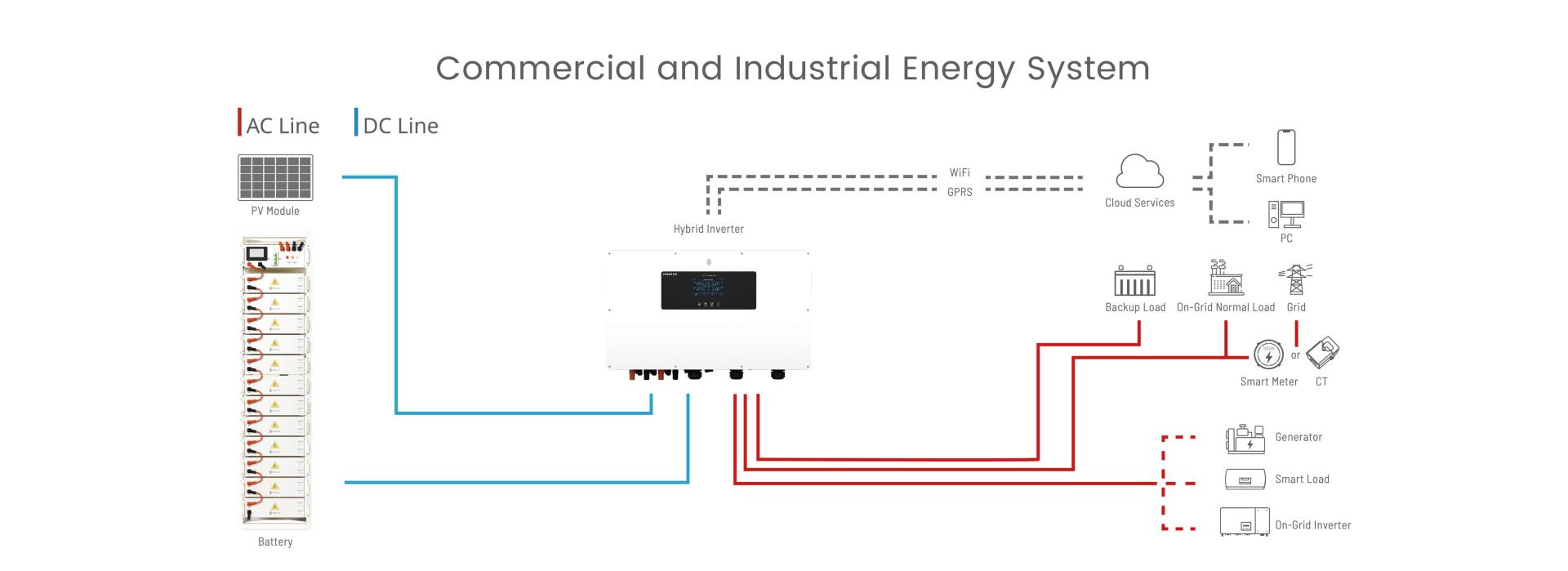
Commercial solar systems are bigger, more elaborate and scalable based on the energy demand of factories or office buildings by businesses or warehouses. These can be as small a rooftop installation or large scale solar farms, based on business size and energy requirement. Commercial solar provides a large opportunity for businesses to save money, improve sustainability and brand image.
Commercial solar systems can offset large-scale energy usage by lowering the amount of electricity bills, which is one important benefit. Since businesses benefit from economies of scale in procurement, they may well be able to get a better cost per watt than residential systems. In addition, a wide range of businesses are able to stack on top further incentives (such as government rebates or grants that cover up-front charges), adding more upside for them in making the investment.
Which System is Suitable; Off-Grid vs On-Grid?
The type of system you go for whether off-grid or on-grid depends a lot with your location, energy needs and budget. Projects in remote locations where connection to the utility grid is simply not available naturally would be perfect for off-grid systems instead. The systems are powered by solar panels and energy storage solutions (for example, batteries) to secure a steady source of power. Off-grid systems can be more expensive to set up because of all the extra battery storage and backup that is required.
For urban and suburban properties that have access to the grid, then on-grid systems are more common. With these systems homeowners and businesses can create their own power during the day, using solar panels allowing them to draw on transmitted electricity for overnight use or when solar is not generating. Selling excess power back to the grid through net metering makes on-grid systems a viable low-cost solution for hundreds of thousands more users.
Important Solar Power System Parts
The Heart Of Any Solar Power System…….Solar Panels
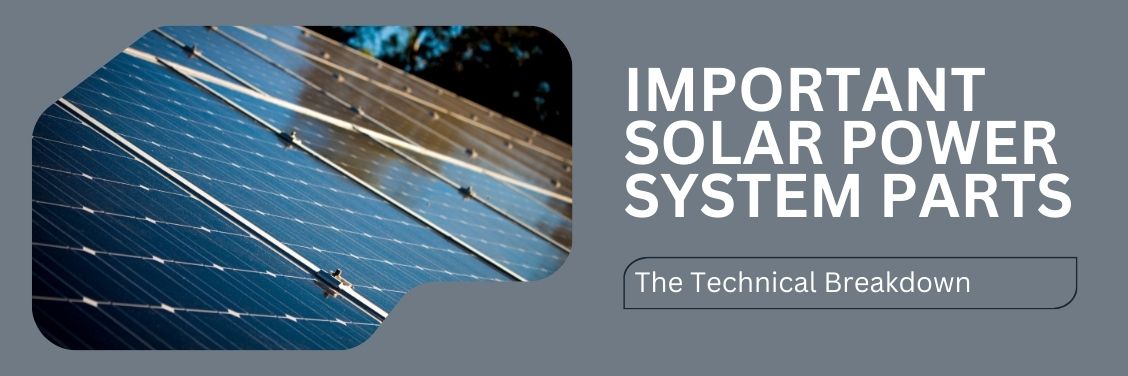
The primary parts of any solar power setup are the actual solar panels themselves. PV cells — Photovoltaic (i.e., sunlight to electricity) Panels, which actually generate the electron flow. The efficiency of the solar panels is a function of several; factors, such as cell quality and angle / orientation to sunlight
Make sure to choose solar panels that have higher efficiency, a long lifespan and warranty. More efficient panels can produce more power per square foot, and this is what matters most when it comes to achieving a higher energy production — especially in regions where there are constraints on the roof space.
Inverters – Solar Energy Conversion
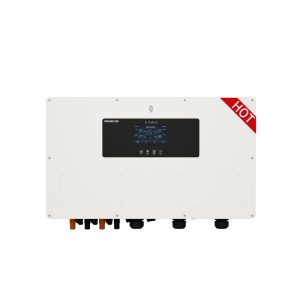
Inverters are a central part of the solar power system as they transform direct current electricity from creating energy by using solar into an alternating current which is commonly used for levels of residential and commercial consumption. Mainly, there are four types of inverters : Hybrid inverter, Grid tie inverter, Off grid Inverters, Micro inverters.
The battery storage is energy saving trees and the alternative independence features.
Many of yields advanced solar system designs use batter storage, particularly as a means to diminish the dependency on grid power. Solar systems send any excess power you generate during the day through your meter into the grid for a benefit (such as extra credits applied to your bill); batteries allow homeowners and businesses to store that surplus energy so it can be used later in night or on cloudy days. This will enhance energy self-reliance and diminish drawing electricity from the grid.
Although batteries can make a solar energy system more expensive upfront, they are ultimately an investment that will help pay for itself over time. However, many of these barriers have been greatly reduced as a result of battery technology advancements and nowadays the modern batteries which are giving you more efficiencies compared to what they used to deliver in earlier days at an affordable cost comparatively.
Sustainability and Longevity: Preserving the Unit of Energy Requirements
Standard Maintenance-Keep It Running Strong and Lifespan of Solar Panels
Although solar power systems require minimal maintenance, regular inspections and upkeep are crucial to achieve maximum efficiency. 4) Keep Your Panels Clean: Another way to prevent a reduction in panel efficiency is to regularly clean the panels of dust, dirt and debris. Check for wear and failure in the inverter & battery system.
Tips for Solving: Common Troubleshoot
Others solar system problems are such as Sungrows not compatible with different inverter connections, panels kicking out only two-digit voltage instead of three digits that rarely warp the panel bus-bar and poor battery longevity. If your system is underperforming, the quickest check for shade or debris on panels. Should the problem not be gone, then go to your inverter and check for an error code or worse signs.
Solar Power Performance Over Time Tracked Using System Monitoring
Existing solar installations are most often equipped with monitoring systems that let users track energy production, consumption and system opertaing characteristics. Real-time information systems assist in detecting alarms early and also optimising power. Most of the monitoring systems provide remote access through mobile app which further ensures convenience for system analysis from any location.
How Many Years Will Solar Panels and Inverters Last?
Inverters may need to be replaced every 10 or so years, but solar panels usually last between 25 and 30 years. Batteries also have a lifecycle of 5-15 years, depending on the battery type and usage pattern. A well-maintained solar power system can provide cheap energy for decades.
Conclusive
Selecting the best solar power system for you requires a lot of thought about your energy requirements, householder specifics and finances. Choosing the correct components and having them installed & maintained correctly will allow you to continue using renewable energy for a long time.
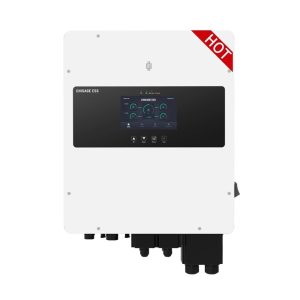
three-phase hybrid solar inverter
20-60kW | MERC-20-60G1-HE
- Support on/off-grid mode switch, EPS output
- Independent AC input port for diesel generator
- Up to 20 PCS inverters parallel for on/off-grid operation
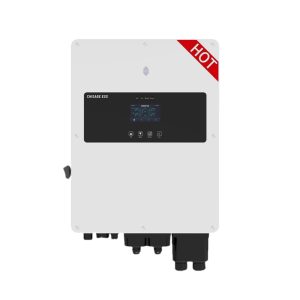
three-phase hybrid solar inverter
5-14kW | MARS-5-14G2-LE
- Support different power inverters parallel connection
- Independent AC input port for diesel generator
- 100% unbalanced output, each phase max. output up to 5kW
Single-phase hybrid solar inverter
3-10kW | JUP-3-10G2-LE
- Independent AC input port for diesel generator
- Colorful 5-inch touch LCD, IP65 protection degree
- Up to 20 PCS inverters parallel for off-grid operation