Related Articles
What Size Off Grid Inverter Will Run A House
Understanding the Importance of Inverter Sizing
Why Choosing the Right Inverter Size is Crucial for Off-Grid Living
In an off-grid system, the inverter is the heart of energy conversion, making choosing the right size for your needs essential. A properly sized inverter ensures that your home runs efficiently, supplying adequate power to all appliances while avoiding unnecessary energy losses. An inverter that is too small may result in frequent overloads and power failures, while an oversized inverter could lead to inefficiencies and higher initial costs. The right size ensures reliability, cost-effectiveness, and optimal performance for your off-grid lifestyle.
The Role of an Off Grid Inverter in Powering a House
An off grid inverter converts the direct current (DC) generated by solar panels or stored in batteries into alternating current (AC), which powers household appliances. Beyond conversion, it regulates energy flow, ensuring all devices receive the correct voltage and frequency. This crucial role makes the inverter indispensable for maintaining a stable power supply in off-grid systems. Without it, your solar energy setup would be unable to meet the daily demands of a modern household.
Common Misconceptions About Off Grid Inverter Sizing
A common misconception is that a larger inverter is always better. While a powerful inverter can handle higher loads, it may not operate efficiently when running small devices. Another misconception is overlooking the need for surge capacity—many appliances require more power to start than run. Ignoring these factors can lead to an underperforming system or costly upgrades.
Factors to Consider When Determining Inverter Size
Calculating Your Household Energy Needs: Appliances and Daily Usage
To determine the correct inverter size, list all the appliances you plan to use and their power ratings. Calculate the total wattage needed during peak usage times. For example, refrigerators, washing machines, and air conditioners consume significant power, while LED lights and mobile chargers require less. Add these numbers to estimate your energy requirements, ensuring you account for simultaneous appliance use.
Peak Power Requirements: Managing High-Demand Devices
Many devices, like refrigerators and pumps, require a surge of power to start before settling into their running wattage. This surge can be several times the operating power. An inverter must have sufficient surge capacity to handle these short bursts of high demand. Choosing an inverter with an adequate peak power rating ensures that such devices start smoothly without overloading the system.
Accounting for Future Energy Expansion: Planning for Growth
You may add more appliances or expand your solar array as your energy needs evolve. Investing in an inverter that can accommodate future growth saves time and money. Select a model with scalability in mind, ensuring it can handle additional loads without a complete system overhaul.
Types of Inverters and Their Suitability for Home Use
Pure Sine Wave vs Modified Sine Wave Inverters: What’s Best for Your Home?
Pure sine wave inverters produce a smooth and consistent AC waveform, making them ideal for sensitive electronics and appliances. Modified sine wave inverters, while more affordable, can cause issues with devices like microwaves or medical equipment due to their choppy output. A pure sine wave inverter is the best choice for reliability and compatibility for most homes.
Single-Phase vs Three-Phase Inverters: Understanding Your Power Distribution Needs
Single-phase inverters are suitable for smaller households with basic energy requirements. In contrast, three-phase inverters provide greater power distribution and efficiency, making them ideal for larger homes or those with heavy equipment. Assess your household’s energy distribution to decide which option aligns with your needs.
How Battery Capacity and Solar Panels Impact Inverter Size
The size of your battery bank and solar array directly influences your inverter choice. Larger batteries and solar panels can support higher loads, requiring a more powerful inverter. Conversely, a smaller setup may only need a compact inverter. Ensuring compatibility between these components is vital for system efficiency.
Step-by-Step Guide to Choosing the Right Inverter Size
Conducting a Comprehensive Energy Audit: Measuring Your Power Demands
An energy audit is a systematic way to measure your power usage. Track each appliance’s wattage and estimate how long it operates daily. Use this data to calculate total energy consumption and peak loads, forming the foundation for your inverter selection.
Matching Inverter Capacity to Solar and Battery Systems
Ensure your inverter’s capacity aligns with the output of your solar panels and battery storage. A mismatch can lead to inefficiencies or system failures. Choose an inverter that complements your solar and battery setup for seamless energy management.
Considering Surge Power Ratings for Peak Loads
Appliances like pumps and compressors demand high startup power. To avoid disruptions, opt for an inverter with a surge rating that exceeds these requirements. This feature ensures stability during peak load scenarios.
Common Mistakes to Avoid in Inverter Sizing
Underestimating Peak Power Requirements: Avoiding Overloads
One of the most frequent errors is neglecting peak power needs. Without accounting for surges, your inverter may trip during appliance startups. This oversight can cause frustration and system inefficiency.
Over-Sizing Your Inverter: Balancing Cost and Efficiency
While it may seem prudent to choose a large inverter, doing so can lead to inefficiency and higher initial costs. Select an inverter that matches your current and foreseeable needs without unnecessary overcapacity.
Ignoring Compatibility with Other System Components
Ensure your inverter is compatible with your batteries, solar panels, and other components. Mismatched systems can result in inefficiencies, reduced performance, or even damage.
Real-World Applications: Examples of Inverter Sizes for Different Homes
Small Homes: Compact Off Grid Systems for Minimal Energy Needs
For small homes with basic appliances like lights, fans, and a refrigerator, a 2-3 kW inverter is usually sufficient. These compact systems provide reliable power for essential needs.
Medium-Sized Homes: Balancing Efficiency and Capacity
Medium-sized homes with additional devices like air conditioners and washing machines typically require a 5-7 kW inverter. This balance ensures efficiency and capability.
Large Homes: Scaling Up for High Power Demands
Large homes with numerous appliances and higher energy consumption benefit from inverters in the 10-15 kW range. These robust systems handle heavy loads effortlessly.
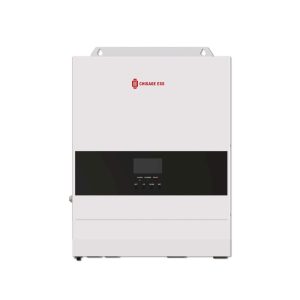
24V Pure Sine Wave Off Grid Inverter
3kW | CE2430-EU-80-H
- Pure sine wave AC output
- Uninterrupted power supply
- Support grid and PV activated lithium batteries
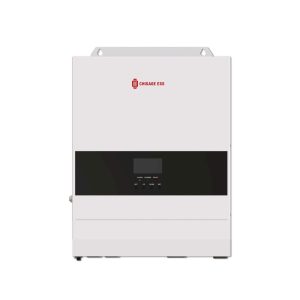
48V Pure Sine Wave Off Grid Inverter
5kW | CEP4850-EU-80-H
- Pure sine wave AC output
- Uninterrupted power supply
- Available for Max. 6 units parallel connection
- Support grid and PV activated lithium batteries